Here are the distinctions between macronutrients, mesonutrients, and micronutrients from three aspects:
Quantity Required: Macronutrients are required by plants in relatively large quantities for their normal growth and development. In contrast, mesonutrients are needed in moderate amounts, while micronutrients are required in very small quantities.
Role in Plant Physiology: Macronutrients play major roles in various physiological processes such as photosynthesis, nutrient transport, and energy storage. Mesonutrients, like calcium and magnesium, are involved in structural roles and enzyme activation. Micronutrients, despite their small quantities, are essential for enzyme function, chlorophyll synthesis, and resistance to stress factors.
Deficiency Symptoms: Deficiency of macronutrients often leads to severe growth retardation and visible symptoms such as yellowing or wilting of leaves. Mesonutrient deficiencies can cause specific symptoms such as leaf curling, tip burning, or stunted growth. Micronutrient deficiencies, on the other hand, may manifest as subtle symptoms such as chlorosis (yellowing) between leaf veins, distorted leaf shapes, or reduced fruit size and quality.
1. Distinguish three from the content aspect: 1. The content of macroelements: macroelements generally account for more than 1% of the dry matter mass of organisms.
2. The content of medium elements: medium elements generally account for 0.1% ~ 1% of the dry matter weight of organisms.
3. The content of trace elements: trace elements exist in very small amounts in living organisms, usually referring to minerals less than 0.01%.
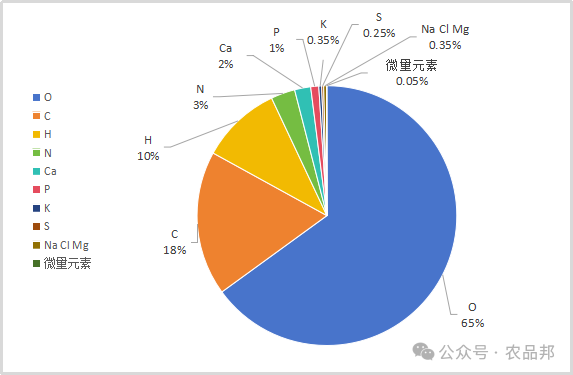
2. Distinguish the three from the aspect of element types:
1. Types of macroelements: generally refer to 6 elements: carbon, hydrogen, oxygen, nitrogen, phosphorus and potassium.
2. Types of medium elements: usually refer to calcium, magnesium and sulfur.
3. Types of trace elements: generally refer to iron, manganese, zinc, copper, molybdenum, boron and chlorine. 3. Distinguish the three from the aspect of function:
1. The role of a large number of elements: carbon, hydrogen and oxygen can form a variety of carbohydrates, which often play an inseparable role in plants, such as lignin, cellulose, hemicellulose and pectin, etc., which are the main components of the cell wall. The monosaccharide, the product of plant photosynthesis, is composed of carbon, hydrogen, and oxygen.
Sugar is the basic substance of plant respiration and a series of metabolic processes in the body, and it is also the raw material for the energy required for metabolic action. Carbohydrates not only form the permanent skeleton of plants, but also serve as food for temporary storage and actively participate in various metabolic activities in the body. Hydrogen and oxygen also play an important role in the biological redox process in plants.
2. The role of medium elements: calcium, magnesium and sulfur have very important and irreplaceable physiological functions in plants. Calcium can stabilize the structure of biofilms and maintain the integrity of cells; Calcium is an important element that makes up the cell wall, and the vast majority of calcium in plants is found in the cell wall.
Calcium promotes cell elongation, which in turn accelerates root growth. Calcium can also bind to calmodulin, participate in second messenger transmission, and activate many key enzymes in plants. A large amount of calcium accumulates in the vacuole and contributes to the balance of anion and cation in the vacuole. Magnesium is a component of chlorophyll and is important for plant photosynthesis.
3. The role of trace elements: although the content of trace elements in the human body is not much, it is closely related to human survival and health, and plays a vital role in human life. Their intake is excessive, insufficient, unbalanced or deficient, and will cause abnormalities or diseases in human physiology to varying degrees. The most prominent role of trace elements is closely related to the vitality of life, and only the size or less of a match head can play a huge physiological role.