Soil is the most important material basis for high-quality and high-yield vegetables. Once the soil structure and soil tillage layer are damaged and the soil deteriorates, growing vegetables will become a tree without roots and water without a source. Not only will it be difficult to obtain high yields of vegetables, but it will also reduce the service life of the greenhouse.
What are the aspects
of soil deterioration? 01 Deterioration of soil physical properties
One of the physical structures of soil is called "soil aggregate structure", that is, the soil is composed of small clusters, which is like earthworm castings. A good soil aggregate structure is both breathable and water- and fertilizer-retaining, and it also has the effect of drought resistance. However, the soil aggregate structure is particularly unstable and is easily damaged by the external environment, including human damage. For example, watering too frequently or too much, or applying uncomposted organic fertilizers, spraying certain chemical fungicides, especially herbicides, will destroy the soil aggregate structure. If the aggregate structure is destroyed, the small molecular clusters that make up it will no longer exist, and the soil will become dough-like. When piled up together, it is easy to cause soil compaction. Many farmers think that soil compaction is simply the hardening of the soil. In fact, it is because the physical structure of the soil has been destroyed that compaction occurs.
Deterioration of soil chemical properties
(1) Soil acidification
The normal neutral soil pH value is about 7. The soil pH value varies in different regions. For example, the soil in Hebei should be neutral and alkaline, with a pH value of about 7-7.5. However, most of the fertilizers we use now are acidic, especially the fertilizers produced by some small manufacturers are of poor quality and are more acidic. Fertilizer is originally a strong acid and weak base salt. Long-term and large-scale use will cause soil acidification and lower pH value. The soil pH value in some areas has even dropped to about 4, which shows that the soil has become extremely acidic.
The harm of soil acidification is manifested in: ① It affects the absorption of nitrogen, phosphorus, potassium and trace elements. Because the absorption and utilization rate of trace elements is completely different under different soil pH values. ② Soil acidification will cause crops to be unadapted and their resistance to stress will drop sharply.
(2) Soil salinization.
Fertilizer itself is an inorganic salt, composed of salt ions. For example, potassium sulfate will decompose into K+ and SO42-. K+ can be absorbed by crops, but SO42- will remain in the soil. The same is true for potassium chloride. When too many ions remain in the soil, the soil salt content is too high.
The hazards of soil salinization are:
① The root system cannot absorb water normally, which affects the growth of vegetable plants. In serious cases, it can be said that the vegetables are like being planted in salt water, with roots submerged and plants dying.
② Salt ions will produce antagonism between each other, affecting the absorption and utilization of various elements by vegetables.
Soil salt damage can be mild or severe:
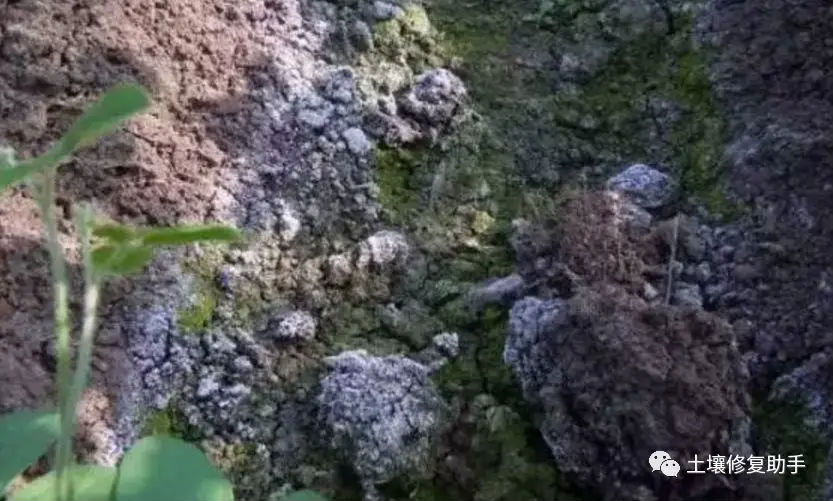
① In the early stage of soil, for example, after about a year of vegetable planting, a layer of green moss will appear, which is called "green frost". The greening is the initial manifestation of soil salinization.
② Moderate soil salinization is manifested in the following ways: When the ground is humid, you will see pieces of red gelatinous substances. When the soil is dry, pieces of things similar to red brick surfaces will appear, namely "red frost". At this time, it will cause negative effects such as leaf wilting, affecting yield.
③ A more serious manifestation of soil salinization is that a thin layer of "white frost" will appear on the ground when it is dry. At this time, the salinization is particularly serious, and the vegetable roots in the greenhouse will be very few. In the later stage, the plants will wilt in large numbers, their growth will be stunted, and they will show severe premature aging. The water in the roots will flow back, the root cortex will turn red, and the stems will wilt and rot.
Deterioration of soil biological properties
The soil is rich in microorganisms, and various microorganisms interact and influence each other. The biological properties of the soil in the newly built greenhouse are relatively good, and the harmful and beneficial bacteria are in a balanced state. As we continue to plant and add chemical fertilizers, the microbial flora in the soil begins to slowly become unbalanced, that is, the number of harmful bacteria accumulates more and more, and the number of beneficial bacteria decreases.
As the number of years of planting increases, root diseases will become more severe, and crop yield and quality will decline. In the end, even if more fertilizer is applied, the yield will not increase. Vegetable farmers often only focus on applying chemical fertilizers, but do not pay attention to the activation of soil biological properties. The deterioration of soil biological properties is one of the main reasons for crop yield reduction.
Soil compaction
Many vegetable farmers simply think that the so-called "soil compaction" means that the soil has become hard and the roots can no longer penetrate. In fact, no matter how hard the soil is, the roots of vegetables can penetrate deep into it. Vegetable roots need to breathe and need oxygen in the soil. Soil compaction will affect the permeability. If you add a lot of water, the water will press out the oxygen in the soil, and the roots will not be able to breathe, which will cause root rot and necrosis. When vegetables reach the middle stage of growth, the rate of root necrosis will exceed the rate of root growth, and the roots will show premature aging, that is, the roots will become shallower and shallower, especially in old greenhouses. The roots of tomatoes and cucumbers can only penetrate about 10 centimeters downward, and most of them become lateral roots, growing to both sides along the ground film. If the roots are dug out, they look quite long, but in fact they are mainly lateral roots.
If the root system is too shallow, it will affect the ability of crops to absorb water and fertilizer. When we apply fertilizer with water, whether it is furrow irrigation or flooding, if 15 cm of water is poured on the aboveground part, the water can penetrate about 50 cm in normal loam. That is to say, in one watering and fertilization, within 50 cm from the soil, there is both water and fertilizer. However, the crops can only absorb about 10 cm of the surface. After absorbing the water and fertilizer of about 10 cm on the surface, they will show symptoms of lack of water and fertilizer.
The physical, chemical, biological and compaction properties of the soil affect each other. If fertilizer is used when the soil is compacted, soil salinization and acidification will become more serious, and the biological properties will also deteriorate. When considering soil improvement, comprehensive improvement should be carried out.
How to improve soil
1 Improvement of soil physical structure
(1) Soil conditioner
The function of soil conditioner is to glue the broken soil particles into small clumps, that is, to restore the soil clump structure. It is convenient to use. Vegetable farmers can sprinkle it directly on the ground before or after turning the soil, and then water it. The soil conditioner will become particularly sticky under the action of water, and the small clumps will form soil colloids. This colloid forms the soil clump structure, ensuring that the soil is breathable and fertile, and the roots are easier to grow.
(2) Straw
Especially for greenhouses that are 7-10 years old, the effect of straw is very good, better than using organic fertilizer alone. Now many vegetable farmers are still using uncomposted manure as organic fertilizer, which is quite harmful. Whether it is chicken manure or cow manure, you can add straw to it to ferment it. Take chicken manure as an example, it contains rich organic matter and nitrogen, phosphorus and potassium. A layer of chicken manure plus a layer of straw, chop them together and ferment them, which can not only reduce the salt in the chicken manure, but also compost more organic matter. At the same time, high-temperature fermentation can eliminate a large part of pathogenic bacteria. For plots with severe soil salinization, straw can be used in large quantities. The straw composting process can absorb part of the salt and reduce soil salinization.
Improvement of soil chemical properties
(1) It is not recommended to use cement or quicklime to adjust the pH value of the soil.
Some vegetable farmers choose cement and quicklime as conditioners to improve the chemical properties of the soil. If the soil is severely acidified, the pH value will definitely increase after using cement and quicklime, and the soil acidification will be solved on the surface. The disadvantage of this approach is that it cannot solve the salinization, and it seriously damages the soil structure, forms precipitation, and causes the soil to deteriorate.
(2) Reduce the use of chemical fertilizers
Some alkaline fertilizers, such as magnesium hydroxide, can be used to adjust the soil pH to a certain extent without forming precipitation.
(3) Improving the utilization rate of fertilizers
Soil chemical properties are closely related to fertilizer utilization. At present, the utilization rate of compound fertilizer in many old greenhouses is extremely low. If compound fertilizer is used alone in some old greenhouses, the utilization rate does not even reach 15%. That is to say, of 100 kilograms of compound fertilizer applied to the ground, only about 15 kilograms can be absorbed by crops, and the remaining 85 kilograms are wasted. This part of the wasted fertilizer will aggravate soil salinization or acidification. It is recommended that compound fertilizer be used only as base fertilizer during vegetable planting, and water-soluble fertilizer should be selected as topdressing as much as possible.
The factors that determine the quality of water-soluble fertilizers are: ① raw materials ② production process ③ synergistic substances. The quality of raw materials is very critical, and synergistic substances are the core substances that determine the utilization rate. For example, some companies' phosphorus-enhancing technology (IPE) not only ensures the absorption of phosphorus in water-soluble fertilizers, but also activates the phosphorus fixed in the soil to make it fast-acting phosphorus, greatly improving the absorption and utilization rate of crop roots; some fertilizers add ion-resistant activators to eliminate the mutual antagonism between ions and ensure the absorption and utilization rate of fertilizers. These unique features can reduce the amount of fertilizer used, improve utilization, and gradually alleviate soil acidification and salinization.
For vegetable fields in Hebei Province, especially some old greenhouses, there is no shortage of fertilizers in the soil, and there is plenty of nitrogen, phosphorus and potassium. The key issue now is: how to activate the remaining nitrogen, phosphorus and potassium in the soil, or the nitrogen, phosphorus and potassium fixed by the soil, little by little, so that crops can absorb and utilize them, rather than applying too much chemical fertilizer. Topdressing principle: It is not about how much topdressing, but absorption. No matter how much topdressing is applied, it is useless if the soil cannot absorb it. The appropriate amount of topdressing can ensure that the absorption and utilization rate of fertilizers is increased to 80%, which will cause less and less damage to the soil. The soil itself also has a buffering capacity, and such soil will become better and better.
Improvement of soil biological properties
To improve the biological properties of soil, we must start from the root, and the best way is to treat bacteria with bacteria. To increase crop yields, it is necessary to add biological agents (biological fertilizers) to the soil. The most mature one in domestic application is Bacillus. Bacillus belongs to bacteria, and there are many types. It is a particularly good bacterial group for alleviating soil replanting and can reduce the occurrence of soil-borne diseases. This is a fundamental solution.
The biological agents used abroad are mainly fungi, such as mycorrhizal fungi and dark green Trichoderma in Trichoderma. Compared with bacteria, the production process of fungal biological agents is more complicated and the purification is more difficult. Foreign manufacturers also have some soil flora conditioners, which use the principle of biostimulants. After flushing into the field, they can stimulate the soil, form a flora suitable for the soil, increase the content of beneficial bacteria, and alleviate crop yield reduction and soil-borne diseases.
In some areas where root diseases are serious, it is slow to cure with bacteria alone. Biological control is a slow process. It requires a certain amount of bacteria to accumulate before a balance of bacteria can be achieved. If the amount of bacteria used in the early stage is relatively small, some chemical agents can be added for auxiliary treatment. For example, add Amicid in the process of water, fertilizer and medicine integration. Amicid is highly active in the soil and can kill a large part of the remaining pathogenic bacteria in the soil. At this time, add biological agents, and the bacterial community can reach a balance as soon as possible.
At present, the domestic bacterial fertilizer market is uneven. When choosing, vegetable farmers should conduct test demonstrations in advance, regardless of whether it is a large or small manufacturer, regardless of the bacterial content. As a living thing, biological agents are subject to greater external constraints. Even for the same bacterial fertilizer, the application effect may be very different due to different soil textures and environmental conditions. It is possible that a certain bacterial fertilizer is particularly good and has a particularly high bacterial content, but when used in your soil, it cannot reproduce and loses its effect. Whether the selected biological agent is suitable for our soil is the key among the keys.
Soil remediation and improvement is a systematic project. It cannot be limited to one point. It should start from the three aspects of soil physical, chemical and biological properties, clarify the purpose of use, and carry out targeted soil improvement. At the same time, pay attention to sustainability, and do not pursue quick results one-sidedly. It is necessary to make the soil reach the best state through overall improvement and gradual accumulation, so as to achieve the goal of high-yield and high-quality vegetables and bumper harvests for vegetable farmers.
(Source: China Vegetables, 191 Agricultural Materials; This article is compiled based on the micro-classroom of Hebei Vegetable Farmers Club. The copyright belongs to the original author. If there is any copyright issue, please contact us to delete it)