Fertilizers are one of the sources of nutrients needed for plant growth. They enter crops in a variety of ways:
Root absorption: This is the main way. The roots of plants absorb water from the soil and mineral nutrients dissolved in water through root hairs and root epidermal cells. Elements such as nitrogen, phosphorus, and potassium in fertilizers usually exist in the form of ions, and plants absorb these ions into root cells through active or passive transport mechanisms.
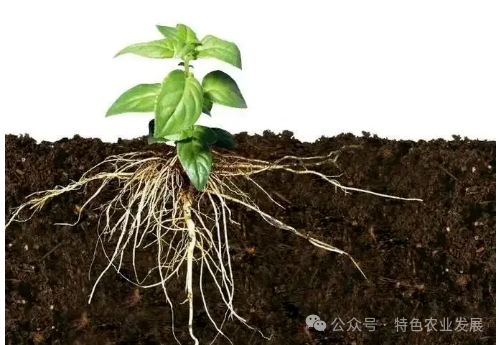
The root is the main organ for plants to absorb nutrients, and the most active part for absorbing nutrients is the root hair formation zone, which is different from the root hair zone, the active area for absorbing water.
The root hair formation zone has vigorous respiratory metabolism and is close to the root hair zone with well-developed conductive tissue, so the absorbed ions are easy to transport. In addition, the root hairs are being formed, so the absorption surface area is huge. These characteristics are conducive to the root system absorbing mineral ions from the external solution.
The inorganic nutrients absorbed by the roots must be dissolved in water before they can be absorbed by the roots. The absorption of inorganic nutrients by the roots can be divided into passive absorption and active absorption according to the absorption method and energy consumption.
Passive absorption mainly includes three methods: diffusion, mass flow and interception.
Diffusion absorption is the process in which ions and molecules in the solution diffuse from high concentration areas to low concentration areas and enter the root system. These substances are mainly CO2, O2, H2O, NH3 and most anions (nitrate ions, chloride ions, etc.). This is the main way to absorb inorganic ions.
Mass flow is also called mass flow or liquid flow. Mass flow absorption is mainly caused by the transpiration of crops, and the nutrients in the solution enter the root cells along with the aqueous solution.
Interception is the way that roots come into contact with nutrient ions and absorb them directly. The amount of intercepted absorption is closely related to the growth of the root system. In the soil system, the crop root system occupies less than 2%-3% of the total volume of the cultivated layer of soil, so the total amount of intercepted absorption is very limited. However, in soilless cultivation, the total amount of intercepted absorption increases by 3 times.
Passive absorption also includes ion exchange adsorption, which is produced by the respiration of root cells. H+ and HCO3- (HCO3- can further ionize to H+) are adsorbed on the surface of the plasma membrane of the root epidermal cells, and may be absorbed by the roots through ion exchange with ions in the soil solution or ions adsorbed on the surface of clay particles. Ion exchange is considered a special form of diffusion, mass flow, and interception absorption.
The concentration of ions in plants is generally much higher than that in soil solution or adsorbed on the surface of soil colloids, but they can still be absorbed against the concentration gradient, which is a process that requires consumption of biological metabolic energy.
When we cultivate crops, especially fruit trees, it is particularly important to maintain the root system. To promote root growth and improve the physiological yellowing of crops, please use Sea Elf root application biostimulant.
Water is fat legs
Regarding the absorption of inorganic nutrients, whether it is passive absorption or active absorption, the absorbed inorganic nutrients are soluble in water.
If the soil around the roots is dry and nutrients cannot be dissolved in water, the roots will not be able to absorb them. The saying "water is the fattest leg" vividly illustrates the importance of water.
In the process of plant growth, water not only provides plants with the moisture they need for growth, but also helps plants absorb nutrients from the soil. Without enough water, plants cannot absorb nutrients from the soil, just like they cannot walk without legs.
Leaf absorption: In addition to the roots, the leaves of plants also have a certain absorption capacity, especially when spraying liquid fertilizers or foliar fertilizers. The nutrients in the fertilizer can enter the plant body through the stomata or epidermal cells of the leaves.
Stem absorption: In some cases, the stems of plants can also absorb nutrients from fertilizers, especially if the plant has root damage or a poorly developed root system.
Role of soil microorganisms: Microorganisms in the soil can decompose organic matter and release nutrients that can be directly used by plants. The activities of these microorganisms help transform and release nutrients in fertilizers.
Soil physicochemical effects: Physical and chemical processes in the soil, such as ion exchange, dissolution, adsorption and desorption, will also affect the form of nutrients in fertilizers and the absorption efficiency of plants.
Irrigation system: In irrigated agriculture, fertilizers can be delivered directly to the roots of crops through irrigation water. This method is called drip irrigation or sprinkler irrigation.